How to Write Jewelry Product Descriptions That Sell
A jewelry description that sells answers four questions in order: how it feels to wear, exactly what it's made of, how it fits the customer's life, and how to care for it — in that order, in under 150 words. Adjective soup ("stunning, elegant, timeless") answers none of those, which is why it converts nothing. The descriptions that sell are specific, sensory and honest — and the honesty does double duty, because accurate descriptions are also the cheapest return-prevention tool a jewelry brand owns.
This guide gives the working formula, the sentence patterns that convert, the specification discipline that builds trust, and the mistakes that quietly cost sales.
The Five-Part Formula
- The sensory opener (1–2 sentences). What it's like to wear — not what it looks like in the photo (the photos do that job). "A fluid rope chain that moves like fabric and catches light at every twist" beats "beautiful gold chain" because it transfers feeling, not decoration.
- The named specs (2–3 lines). Material with grade, plating process, dimensions, weight. "316L stainless steel, PVD 18K gold plated finish, 40 cm + 5 cm extender, 8 g" — the lines that answer the questions customers otherwise email about.
- The life translation (2–3 sentences). What the specs mean in practice: shower-proof, no green marks, sleep-in safe. This is where material knowledge becomes selling points — the grade is the benefit.
- The styling hook (1 sentence). Where it sits in a wardrobe: layers with X, wears from desk to dinner, the everyday piece.
- The care line (1 sentence). One honest care note sets expectations and prevents the "did I ruin it?" message later.
Sensation, specification, translation, styling, care — five moves, and every one of them answers a question a customer actually has.
Specs: The Trust Layer (Where Most Brands Go Vague)
The specification section is where trust is won, because vagueness reads as hiding. The discipline:
- Name the grade, not the family. "316L stainless steel" tells the customer something; "stainless steel" tells them nothing (why the grade is the quality marker).
- Name the finish process. "PVD 18K gold plated" is a durability claim with a mechanism behind it; "gold tone" is a color. Customers increasingly know the difference — write for the informed half, and the uninformed half still gets specificity.
- Dimensions in both directions. Length and how it sits (where a 40 cm chain lands on the neck), diameter for hoops, width for bands. Scale questions are return questions.
- Weight. Jewelry weight is a fit-feel spec — surprisingly light or solid-heavy are both worth declaring before the unboxing decides.
The Sentence Patterns That Convert
A few structures carry most of the weight in good jewelry copy:
- The "designed for" line: "Designed for the shower-to-gym-to-dinner life — wear it and forget it." Ties specs to a lifestyle in one stroke.
- The honest-limitation line: "Not resizable — but the open band spans two sizes." Paradoxically, naming a limitation builds more trust than pretending none exists.
- The specific-comparison line: "The weight of fine jewelry without the maintenance ritual." Positions without disparaging.
- The care promise: "Rinse, dry, wear again — that's the whole routine." Care copy pre-empts anxiety and returns (the returns connection).
The Mistakes That Cost Sales
- Adjective stacking. "Stunning elegant timeless gorgeous" carries zero information and reads as generated. Every adjective should survive the question "which adjective?"
- Vague materials. "High-quality metal" is the copy equivalent of no stamp — it's the phrase customers have learned to distrust.
- Unanswered fit. No dimensions, no scale, no weight — the description leaves every fit question open, and open questions become returns.
- Copy-paste sameness. Ten products, one template with the name swapped. Customers read three listings and notice; specificity per piece is the differentiator.
- Overpromising. "Lasts a lifetime, waterproof forever, never fades" — overclaiming manufactures the exact disappointment returns are made of. Describe what the process actually delivers and let delivery build the brand.
A Worked Example
Before: "Beautiful gold heart bracelet, high quality, elegant design, perfect gift for someone special. Get yours today!"
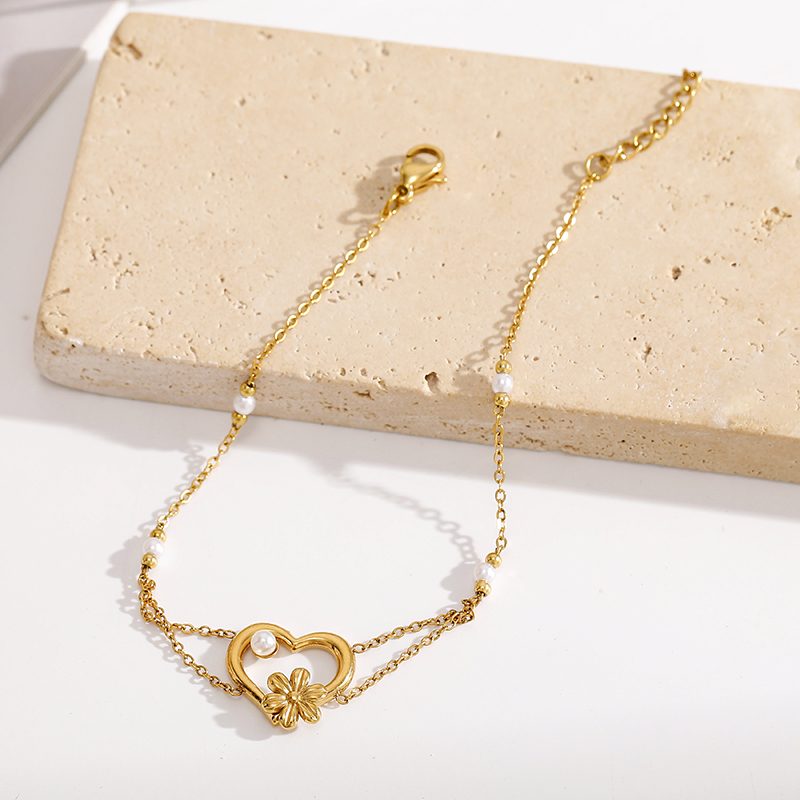
After: "A double-strand gold bracelet with an open heart and flower centerpiece — delicate on the wrist, built for constant wear. 316L stainless steel with a PVD 18K gold plated finish: shower-proof, sweat-proof, no green marks, ever. Fits 16–18 cm wrists with the extender chain; 4 g, so it all but disappears until the light catches it. Rinse, dry, wear again. The everyday bracelet for people who never take their jewelry off."
Same product. The second one converts because it answers the five questions — and it's the difference customers feel before they can name it.
The SEO Layer (Without Breaking the Copy)
Product descriptions do double duty: converting the reader and telling search engines what the page is. The SEO work that doesn't corrupt the copy:
- Front-load the primary phrase in the first sentence where it reads naturally — "A double-strand gold bracelet…" already contains what shoppers search.
- Include the question-shaped long-tails as natural phrases: "shower-proof," "no green marks," "adjustable 16–18 cm" are how people actually search jewelry, written as plain English.
- Keep the meta description equal to the summary — one honest 155-character pitch, not a keyword string.
- Skip keyword stuffing entirely. "Gold bracelet gold heart bracelet gold jewelry gift" reads broken to customers and to search engines alike; specificity is the modern SEO.
The deeper point: descriptions that answer real pre-purchase questions are the same ones that reduce returns — and return-rate and search ranking both feed on genuine helpfulness. Good copy isn't an SEO trick; it's the same honest document doing three jobs.
A Template by Jewelry Type
| Piece | The opener that works | The must-have spec |
|---|---|---|
| Necklace | Where it sits and how it moves | Length + extender |
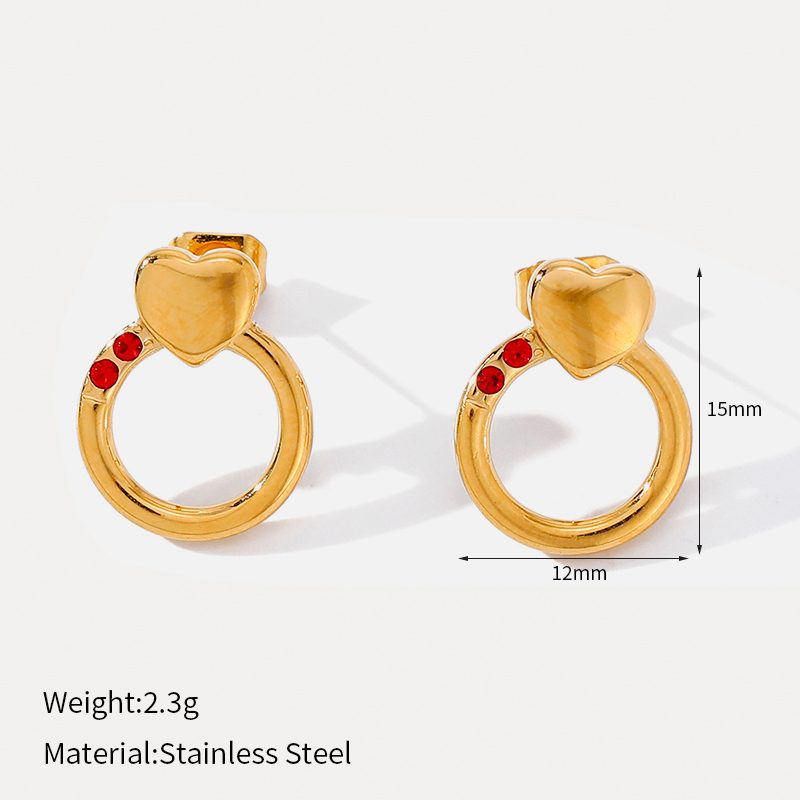
| Earrings | The ear-line effect, weight on the lobe | Weight + back type |
| Ring | The hand it builds | Width + sizing range |
| Bracelet | The wrist drape and sound | Wrist fit range |
| Anklet | The summer context | Length + charm behavior |
Five openers, five specs — every listing starts with its category's real question instead of a template's blank page.
FAQ
How long should a jewelry product description be? Around 100–150 words for the main description, structured as the five-part formula. Longer only if the piece genuinely carries more to say (heirloom pieces, custom work); shorter reads thin, longer reads padded.
What should a jewelry description include? The five: a sensory opening, named materials with grade and process, dimensions and weight, how it fits daily life, and one care line. Each answers a real pre-purchase question.
Why do jewelry descriptions need material grades? Because "stainless steel" alone is a styling claim, while "316L" is a specification — and the customers who care most (sensitive skin, waterproof-wear seekers) buy on exactly that line. Grade transparency converts and pre-empts returns.
Can product descriptions really reduce returns? Yes — the top return causes (color mismatch, size surprise, quality expectations) are all description failures. Accurate color language, full dimensions and named finishes address each directly.
Should jewelry descriptions mention care instructions? One line, always. Care notes set wear expectations ("shower-safe, no polishing needed") and prevent the "is this normal?" support messages — and on durable materials they're a selling point in themselves.
How do descriptions work with product photos? They divide the labor: photos show scale, color and drape; the description explains material, dimensions, fit and care — the things a photo can't say. A listing where the copy repeats what the photo shows wastes half the page; the photography shot list and the five-part formula are designed to interlock without overlap.
 How to Write Jewelry Product Descriptions That Sell
 How to Start a Charm Bracelet: Beginner's Guide
 Why Does My Jewelry Smell? Causes and Fixes
 How to Measure Bracelet Size: The Wrist Guide