Necklace Chain Types Explained: Find Your Chain Style
A cable chain has uniform round links; a rope chain twists multiple strands into a spiral; a paperclip chain lays flat with elongated links — and those three differences decide everything about how a necklace looks, drapes and wears. Chain style is the most underrated choice in buying jewelry: it changes the weight, the shine, whether pendants sit well, and how the piece survives daily life.
Here are the chain types worth knowing, what each is actually good at, and how to pick between them for layering, pendants and everyday wear.
The Chain Types Worth Knowing
| Chain type | How it's built | Look | Best for |
|---|---|---|---|
| Cable | Uniform round/oval links, one into the next | Classic, delicate, quiet shine | Pendants, first fine-style chains, layering base |
| Rope | Two or more link strands twisted in a spiral | Textured, sparkly as it moves | Everyday wear; holds a pendant securely |
| Paperclip | Elongated flat links alternating direction | Modern, architectural, flat-lying | Statement layering; solo wear |
| Curb | Uniform links twisted flat to interlock tight | Sleek, lies flush, catches light evenly | Both chokers and longer pieces; unisex styling |
| Cuban link | Tight interlocking flattened oval links, rounded profile | Bold, dimensional, substantial | Standalone statement pieces |
| Figaro | Pattern of 2–3 short links then one long link | Rhythmic, eye-catching detail | Solo wear with personality |
| Box | Small square links forming a smooth ribbon | Clean, almost liquid look | Minimalist daily wear |
| Snake | Round wavy plates coiled into a smooth tube | Slinky, fluid, closest to metal-on-skin | Chokers and sleek solo styles |
| Herringbone | Angled flat plates laid in a V pattern | Mirror-like ribbon, drapes flat | Dressy solo statement; extra care needed |
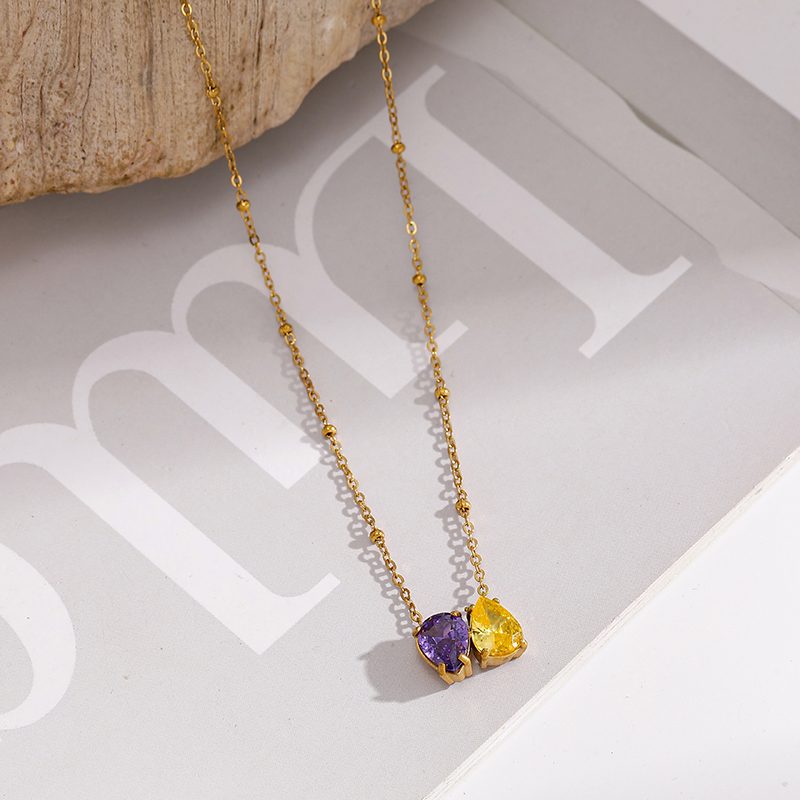
| Ball / bead | Small spheres linked by segments | Playful, dotted texture | Casual layers; satellite styles with spaced beads |
| Rolo / belcher | Uniform round links, each flat and wide | Chunky-cute, symmetrical | Charm carriers, everyday stacks |
Two families, one rule: links that move in every direction (cable, rope, rolo) are the durable all-rounders; chains built from flat plates (herringbone, snake) are the sleek dress pieces that need gentler handling.
The Three Questions That Pick Your Chain
1. Pendant or no pendant? Pendants need a chain that holds its shape at the clasp and bail without competing visually: rope, cable and curb are the classic carriers. Herringbone and snake chains only work with slide-style pendants — their flat profiles can't pivot around a bail. A paperclip chain wears a small pendant charmingly off-center at the front link, a styling trick in its own right.
2. Layering or solo? Layering wants contrast in texture and weight: pair a paperclip base with a shorter cable-plus-pendant, or a snake choker over a longer rope. Stacking three chains of the same family (three curb chains) reads heavy; alternating families reads styled. Solo statement is where Cuban links and herringbone live — they don't share the neckline well.
3. Daily wear or occasion? For the never-take-it-off lifestyle, choose linked chains — cable, rope, rolo, curb — in 316L stainless steel: no links to kink, no flat plates to crease, and the material survives showers, gym and sleep as we explain in our guide to wearing jewelry 24/7. Save herringbone and snake for occasion wear; their beauty is also their fragility — a sharp bend in a flat-plate chain is noticeable.
Why Chain Style Matters More in Stainless Steel
Chain making is where jewelry manufacturing shows its quality. In steel jewelry, the chain is usually where you can judge a supplier fastest: uniform links, smooth soldering, clasps that align cleanly — or sloppy work that snags hair and kinks within weeks.
Two practical notes for steel chains specifically. First, weight: steel is denser than silver, and chunky styles like Cuban links carry real heft — part of the appeal, but worth knowing for long wear. Second, finish: steel takes PVD 18K gold plating beautifully, and on linked chains the process coats evenly into the link gaps — which is exactly where cheaper electroplating fails first. Browse how these wear in practice across our necklaces collection.
Sizing: The 30-Second Chain Length Guide
| Length | Where it sits | Works for |
|---|---|---|
| 14 in / 35 cm | Snug at the base of the neck | Chokers, snake and herringbone styles |
| 16 in / 40 cm | Just below the collarbone | The everyday default; pendants |
| 18 in / 45 cm | At or just below the neckline | The most versatile length; layering anchor |
| 20 in / 50 cm | Below the neckline | Layering base under shorter pieces |
| 22 in+ / 55 cm+ | Upper chest | Long pendants, lariat styles |
Layering math made simple: keep 5 cm (2 in) between layers, and let only one layer carry a statement — the rest are texture.
How to Spot a Quality Chain in 20 Seconds
Chain construction is the fastest quality read in any jewelry listing, and four checks separate the keepers:
- Uniformity. Hold the chain straight: link sizes should repeat exactly. Wavering link sizes mean hand-soldering shortcuts that predict kinks later.
- The clasp test. Open and close it five times. It should snap crisply, align centered, and feel heavier than the links — clasps are usually where suppliers economize first.
- Solder points. Look for a visible seam or discoloration ring on links near the clasp and at the pendant bail — clean soldering is nearly invisible at reading distance.
- The drape. Lift the chain by the clasp and let it hang: quality chains fall in a smooth line; stiff sections or twists reveal uneven links that will irritate on-skin.
Steel adds one bonus signal: weight. Density is part of the material, so a chain that feels surprisingly light for its size is telling you the alloy or the links are downgraded — the same logic as judging quality by grade transparency.
FAQ
What are the most popular necklace chain types? Cable, rope and curb chains are the enduring everyday classics; paperclip chains have become the defining modern style; herringbone and Cuban links lead the statement category.
Which chain is best for pendants? Rope and cable chains are the classic choices — they hold shape at the bail, don't compete visually, and their links move in every direction without kinking. Flat-plate chains (herringbone, snake) only suit slide-style pendants.
What is the difference between cable and rope chain? A cable chain connects uniform round links one into the next for a classic, delicate look. A rope chain twists multiple link strands into a spiral, giving more texture, more sparkle in motion, and slightly more durability per width.
Which chain type is most durable? Among linked chains, rope and curb are the workhorses — their interlocked geometry resists kinking. Flat-plate chains like herringbone are the most fragile: a sharp crease is permanent. Material matters as much as style: 316L steel chains outlast silver or plated fashion chains in daily wear.
Can you shower with stainless steel chains? Yes — that's a core advantage of the material. Link chains in 316L shrug off water, soap and sweat; a weekly rinse keeps them bright. The same shower-proofing applies to PVD 18K gold plated chain styles.
Which chain style looks best with a V-neck? A V-neck repeats its own geometry: a rope or cable chain with a pendant sits naturally in the V at 16–18 inches, while a paperclip chain echoes the angular line without a pendant. Round, liquid styles like snake chains deliberately contrast the neckline — a valid styling choice, but contrast works better lower on the chest.
Do thin chains break easily? Quality thin chains are stronger than they look — a 1 mm cable chain in 316L steel handles daily wear that would snap silver of the same width. The failures come from snag points: a partially closed jump ring or a misaligned clasp. That is what the clasp test and solder check in the quality section above are for.
 How to Start a Jewelry Brand in 2026: Step-by-Step
 Why Does Gold-Plated Jewelry Fade? (And What Lasts)
 How to Measure Ring Size at Home (3 Easy Methods)
 Necklace Chain Types Explained: Find Your Chain Style