What Is Waterproof Jewelry? (And Does It Last?)
Waterproof jewelry is jewelry made from materials that water cannot damage — genuinely waterproof pieces are made from 316L stainless steel, solid gold, titanium and similar non-reactive metals, and they can be worn in the shower, the pool and the ocean indefinitely. The term has also become a marketing label, so knowing which materials earn the word matters more than trusting the word itself.
If you've ever taken a necklace off before showering for the hundredth time, this is the category that ends the ritual. Here's what waterproof actually means, which materials qualify, and how to read the claims.
What "Waterproof" Should Actually Mean
Precisely used, waterproof jewelry means the materials themselves are non-reactive to water — the metal doesn't corrode, tarnish, discolor or degrade with water exposure, indefinitely and in any water type:
- 316L stainless steel — the accessible standard; chromium's protective layer blocks corrosion entirely.
- Solid gold (any karat) — gold doesn't react with water.
- Titanium — chemically inert in body contact and water.
- Platinum — same inertness, premium price.
And critically: waterproof means the finishes are waterproof too. A steel base with a plated surface is only as waterproof as that surface — which is why the serious entries use PVD coating, bonded molecularly, rather than dip plating that water lifts in weeks.
Waterproof isn't a coating you add — it's a property the material either has or doesn't.
Waterproof vs. Water-Resistant vs. "Just Don't Get It Wet"
Jewelry marketing uses the terms loosely, so here's the honest ladder:
| Claim | What it should mean | The reality check |
|---|---|---|
| Waterproof | Indefinite water exposure, any water type | Only true for non-reactive metals with bonded finishes |
| Water-resistant | Handles splashes and brief exposure | Common on plated pieces — brief means brief |
| Tarnish-free | No oxidation over time | A material property (steel, gold) — not a coating behavior |
| Sweat-proof | Survives daily sweat and workouts | Same chemistry as waterproof, tested on skin |
The test that settles it: wear the piece in the shower for two weeks. Genuine waterproof jewelry looks identical afterward; a water-resistant claim wearing thin looks duller by day ten. No tag needed — the metal reports honestly.
The Materials That Qualify — and the Ones That Don't
Qualify: 316L stainless steel, titanium, solid gold, platinum — and finished pieces where every layer qualifies (steel base, PVD coating, water-safe stones like CZ and most crystals).
Don't qualify: sterling silver (tarnishes, especially with sweat and sulfur), brass and copper (corrode and mark skin), conventional plated fashion jewelry (the finish lifts), pearls (porous and chemical-sensitive), and most organic materials (wood, leather, some shells).
That second list explains the traditional habit of removing jewelry at every sink — the habit exists because most jewelry historically wasn't waterproof. Waterproof materials remove the habit, not the water.
Does Waterproof Jewelry Last? The Honest Answer
The materials last indefinitely — but "waterproof" describes the water relationship only. Three things still age any jewelry, waterproof or not:
- Abrasion. Water doesn't scratch; surfaces do. Steel resists scratching far better than soft metals, but nothing is scratch-immune.
- Coating quality. PVD finishes are rated for years of daily wear; thin coatings aren't — ask which process any gold-tone piece uses.
- Mechanical wear. Clasps and chains wear with use regardless of water — inspect hardware periodically.
The practical answer for a buyer: waterproof steel jewelry from a quality supplier looks the same after a year of showers, pools and workouts as the day it arrived — and the rinse-and-dry habit (the full routine) keeps it that way indefinitely.
How to Read "Waterproof" Claims When Shopping
- Ask what the piece is made of — grade and finish. "Waterproof stainless steel" should come with the grade (316L) and the finish process (PVD).
- Be suspicious of waterproof claims on plated brass. The base corrodes even if a coating hesitates; the claim rarely survives the season.
- Pearls, wood and leather disqualify the claim — a "waterproof" necklace strung with pearls is marketing, not materials.
- Price sanity: genuine PVD-on-steel costs more than plated fashion pieces — the process has real equipment costs. A "waterproof" claim at fast-fashion pricing deserves skepticism.
Browse our waterproof-steel collections — every piece is built on the materials listed above.
FAQ
What jewelry is actually waterproof? Jewelry made from non-reactive metals: 316L stainless steel, titanium, solid gold and platinum — including pieces where the finish is a bonded PVD coating rather than surface plating. These survive showers, pools and oceans indefinitely.
Can you shower with waterproof jewelry? Yes — that's the definition. Genuine waterproof pieces (steel, PVD-finished steel, solid gold) are designed for constant water exposure with no removal routine.
Does waterproof jewelry tarnish? No — tarnish requires the metal to react with air and moisture, and non-reactive materials don't. If a "waterproof" piece tarnishes, the claim was about a coating, not the material.
Is 316L stainless steel really waterproof? The steel doesn't corrode, tarnish or degrade with any water exposure — shower, pool, ocean or sweat — which is the practical definition of waterproof for jewelry. The surface can pick up temporary film from soaps, which rinses off.
What's the difference between waterproof and water-resistant jewelry? Waterproof means indefinite exposure to any water; water-resistant means brief exposure — splashes, not swimming. The distinction usually tracks the materials: non-reactive metals are waterproof; coated reactive metals are at best water-resistant.
The Stone Question: Waterproof Settings Too
A waterproof chain with a water-sensitive stone isn't waterproof — the full piece inherits its weakest material:
| Material | Water-safe? | Notes |
|---|---|---|
| Cubic zirconia | Yes | The standard stone on waterproof pieces |
| Crystal | Yes | Sealed settings handle daily water |
| Natural stones (most) | Yes | Quartz family, jasper, amazonite |
| Pearls | No | Porous; chemicals and sweat damage them |
| Opal | No | Cracks with water swings |
That's why serious waterproof lines set CZ and natural stones in bezels on steel — the whole piece shares one water rating, from clasp to stone.
FAQ
Waterproof vs Gold Plated: Do You Have to Choose?
Here's the question the jewelry counter used to make you answer wrong: gold-tone pieces were traditionally the least waterproof (plating lifted in weeks of showers), so style-conscious, water-loving buyers had to pick their poison — gold look or water life.
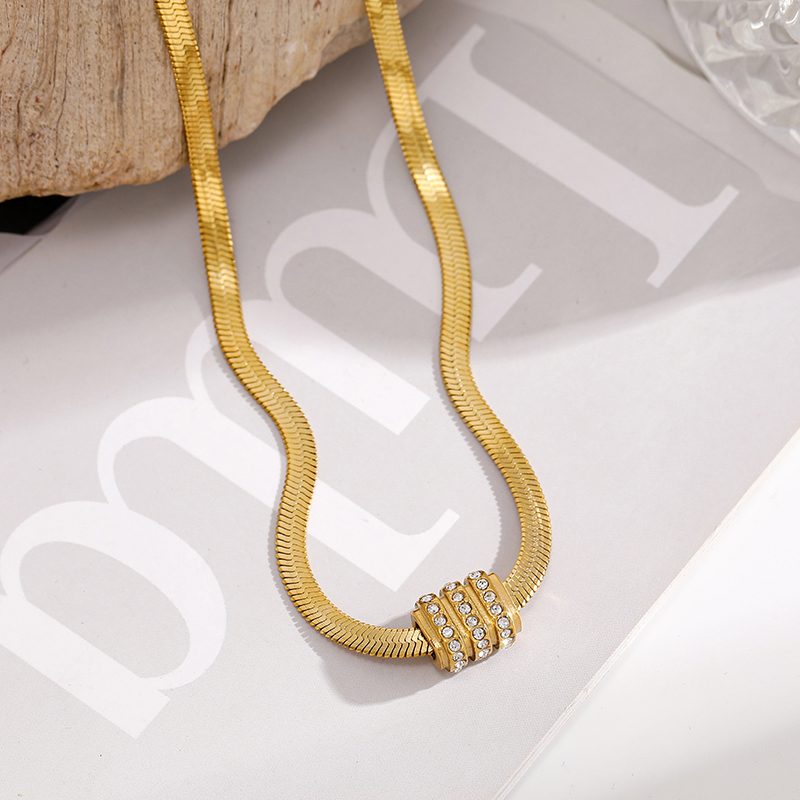
The modern answer is that the trade-off was solved, not balanced: PVD 18K gold plated 316L steel delivers the gold look and the waterproof life in one piece, because the molecularly bonded finish doesn't lift in water the way dip plating does. If a seller offers "waterproof gold jewelry," ask which process — the honest answer is PVD over steel, and the dishonest one is a coating that a two-week shower test will expose.
The Salt Water Question
Pool chlorine, ocean salt, hot tub heat — the full gauntlet — deserves its own honest answer for waterproof materials: 316L steel takes all of it. The molybdenum in the alloy exists precisely for chloride resistance (the chemistry); the ocean and the pool are the same non-event as the shower. The after-swim rinse is habit, not necessity (the full routine) — the piece would be fine without it, just marginally brighter with it.
FAQ
Does waterproof jewelry include the clasp? It should — a waterproof chain with a plated brass clasp fails at the link, which is why quality waterproof pieces use steel hardware throughout. Check the clasp material specifically when assessing any waterproof claim; it's the component most often downgraded.
Wholesale Stainless Steel Jewelry from IVANDA
Looking for a reliable stainless steel jewelry supplier? IVANDA supplies 316L pieces with PVD 18K gold plating - waterproof, skin-friendly and made for everyday wear. MOQ 60 pcs per style, in stock and ready to ship, with OEM/ODM services for custom designs. Message us on WhatsApp or email [email protected] for the latest catalog and wholesale prices.
 OEM & ODM Stainless Steel Jewelry Services — IVANDA
 Importing Jewelry from China: Hidden Costs to Know
 How to Wear Statement Jewelry (Without Overdoing It)
 How to Build a Jewelry Capsule Wardrobe