Birthstones by Month: The Complete Guide
Every month has a birthstone — a gemstone traditionally assigned to people born in that month, worn as a personal signature or given as a birthday gift. January starts with garnet's deep red and the year travels through amethyst, emerald, ruby, sapphire and more to December's turquoise-blue finish. The list below covers all twelve, with colors, meanings, and how to wear each look without the fine-jewelry price.
Birthstone jewelry is one of the most gifted categories in fashion — personal by definition, flattering by color, and impossible to get "wrong" if you know the month. Here's the complete chart and what to do with it.
The Birthstone Chart: All 12 Months
| Month | Birthstone | Color | Traditional meaning |
|---|---|---|---|
| January | Garnet | Deep red | Protection, constancy |
| February | Amethyst | Violet-purple | Calm, clarity |
| March | Aquamarine | Pale sea blue | Serenity, courage |
| April | Diamond | Clear/white | Strength, eternal love |
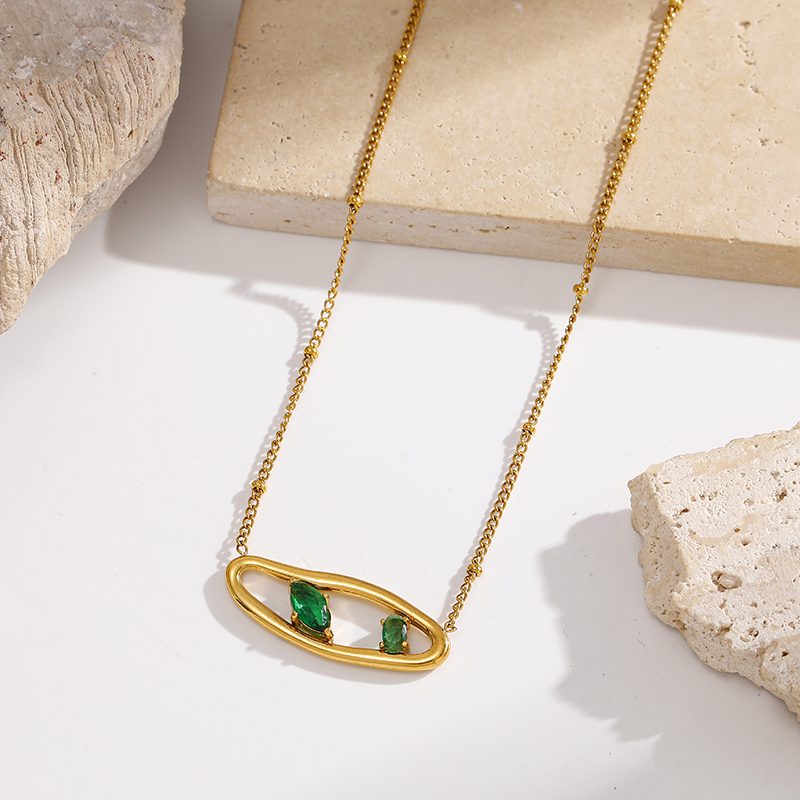
| May | Emerald | Vivid green | Renewal, wisdom |
| June | Pearl | White/cream | Purity, elegance |
| July | Ruby | Rich red | Passion, vitality |
| August | Peridot | Bright olive green | Strength, good fortune |
| September | Sapphire | Deep blue | Truth, loyalty |
| October | Opal / Tourmaline | Iridescent / pink | Hope, creativity |
| November | Citrine / Topaz | Golden yellow | Joy, abundance |
| December | Turquoise / Tanzanite / Zircon | Turquoise blue | Good fortune, protection |
One glance at the chart explains birthstone jewelry's lasting appeal: it's a color code everyone recognizes instantly and nobody ever has to explain.
A One-Paragraph History
The concept traces back millennia — to the twelve stones of the Breastplate of Aaron in biblical tradition, later linked by scholars to calendar months. The modern standardized list took shape in the early 20th century (with additions since — June, October and December each gained alternate stones to satisfy demand). What began as talismanic tradition is now the most personal category in jewelry gifting: the one piece of jewelry whose "meaning" is printed on the calendar.
How to Wear the Birthstone Look at Accessible Prices
Here's the practical reality the fine-jewelry industry doesn't advertise: the birthstone look — the color, the cut, the setting — is available without the mined-stone price. This is where cubic zirconia quietly wins: modern colored CZ is produced across the entire birthstone palette (garnet red, amethyst purple, emerald green, sapphire blue), with consistent color through the whole stone, set in the same styles as fine jewelry.
The material pairing that makes birthstone jewelry genuinely wearable — not occasion-locked — is colored stones in 316L stainless steel:
- Water-safe: shower, gym and beach don't touch steel or CZ — the birthstone ring stays on through everything.
- No green marks: CZ in a steel setting never exposes skin to reactive metals (the green-skin mechanism), so sensitive wearers can wear their month daily.
- Finish options: the same styles come in silver-tone and PVD 18K gold plated finishes, so the birthstone reads through the metal language the wearer actually wears.
Browse stainless steel rings and earrings for the current color-stone lineup.
Gifting Birthstone Jewelry: The Three Rules
- Match the month, then match the metal to the person. The birthstone is the personal part; the finish is the taste part. A gold-tone wearer gets gold-tone settings — check their current jewelry before buying.
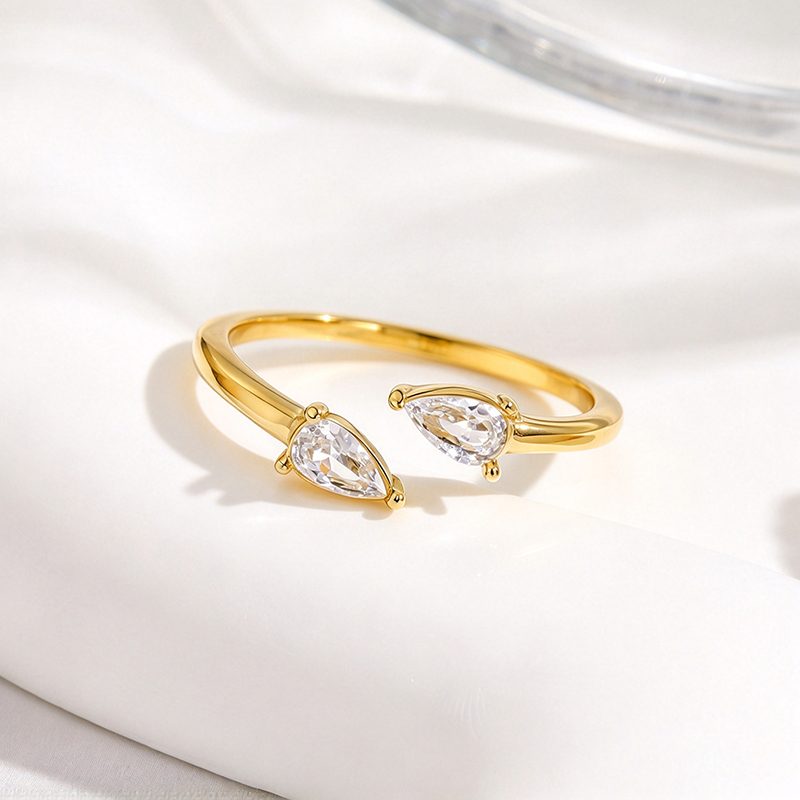
- Stack it with meaning. A birthstone ring stacks beautifully with plain bands (see our ring stacking guide) — one meaningful stone between quiet metals is the classic composition.
- When the month is unknown, gift the color. For gifts where the birthday is awkward (a colleague, a sister-in-law), skip the strict chart and gift the color that suits them — the sentiment carries; the calendar doesn't have to.
The best birthstone gift is the one worn daily — which makes the material choice matter more than the stone's pedigree.
Caring for Birthstone Pieces
Colored CZ and steel pieces need almost nothing: rinse with mild soap when dull, dry with a soft cloth, store separated (the 60-second routine covers it). For genuine-stone pieces in soft gems (opal, pearl, turquoise), the rules tighten — no ultrasonic cleaners, no pool chlorine, and gentle storage — one more reason the steel-and-CZ version is the everyday choice and the mined stone is the occasion piece.
Birthstone Styles by Wearer
The chart is the easy part; matching the style to the person is the actual gift skill:
- The minimalist: a single small birthstone stud or a thin solitaire-style band — the color does the talking, nothing else. Reads adult, works in office settings.
- The stacker: a birthstone ring built for stacking — colored stone between plain bands, expandable every birthday with the family's other months.
- The classicist: birthstone studs or a solitaire pendant in a gold-tone finish — the configuration that never ages out.
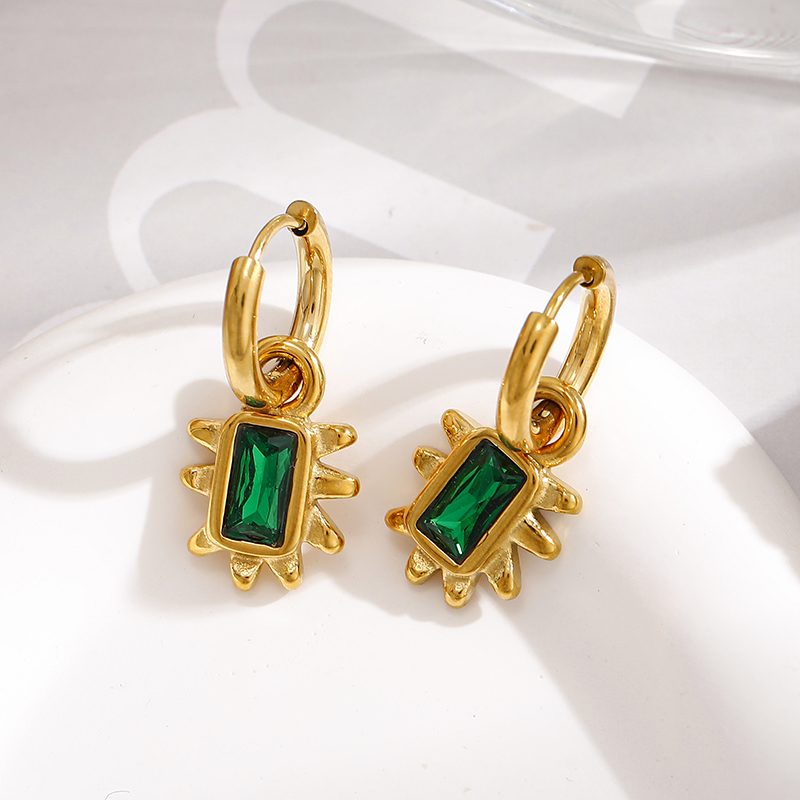
- The maximalist: birthstone huggies or charm earrings — the green-emerald huggies and garnet drops of the world. Brings the color to the ear line where conversation happens.
- Mothers and grandmothers: family birthstones combined — multiple months' stones in one piece, or one stone per child worn as a stack. The most sentimental category in all of jewelry gifting.
FAQ
What are the 12 birthstones by month? January garnet, February amethyst, March aquamarine, April diamond, May emerald, June pearl (alt: alexandrite), July ruby, August peridot, September sapphire, October opal (alt: tourmaline), November citrine (alt: topaz), December turquoise (alt: tanzanite or zircon). Alternate stones are part of the official modern list, so any of a month's options counts as the birthstone.
Can I wear a birthstone that isn't my month? Of course — the "rules" are tradition, not law. Plenty of people wear their favorite color, a child's or partner's stone, or several months at once in a family stack.
What birthstone is the most popular gift? Diamond (April) dominates as the classic, but colored stones — sapphire, emerald and ruby — are the standout choices for personal birthday gifts because the color reads instantly as "chosen for you."
Are birthstone colors available in affordable jewelry? Yes — colored cubic zirconia reproduces the full birthstone palette accurately, and set in 316L stainless steel it becomes water-safe, tarnish-free everyday jewelry at accessible prices.
Which birthstones should avoid water? In genuine stones: opal, pearl and turquoise are the delicate ones — no pools, no ultrasonic cleaners, gentle storage. In CZ-and-steel versions, water is a non-issue; a rinse and dry is the whole care routine.
Why do June, October and December have multiple birthstones? Tradition met practicality: the original stones for those months (pearl, opal, turquoise) are relatively delicate and were hard to source consistently, so the modern lists added durable alternates — alexandrite, tourmaline, tanzanite and zircon. Today you wear whichever of the month's stones suits your style or budget.
Is it bad luck to wear someone else's birthstone? No — that's folklore with no enforcement arm. The traditional belief framed your own stone as protective, but wearing a loved one's stone (a partner's, a child's) is one of the most common and beloved ways to wear birthstones today.
Which metals work best for birthstone jewelry? For everyday wear, 316L stainless steel is the practical champion — it never tarnishes, tolerates water and sweat, and holds colored CZ securely in bezel or prong settings. Sterling silver offers precious-metal tradition with more care; gold-tone PVD coated steel splits the difference with the gold look and steel's durability.
 Jewelry Packaging: A Small Brand's Guide
 What Is Rose Gold? The Rose Gold Plating Guide
 How to Stack Rings: A Practical Ring Stacking Guide
 Birthstones by Month: The Complete Guide