
How to Stack Rings: A Practical Ring Stacking Guide
Stack rings with one anchor piece and one to three accents: mix band widths instead of matching them, spread across at least two fingers, and keep the total odd. That's the working formula behind every ring stack that looks styled rather than accidental. The rest is proportion — and, honestly, the freedom to break the rules once you know them.
Ring stacking is the most customizable trend in jewelry: no sizing commitment, endless recombination, and a different look every morning from the same few pieces. Here's how to build a stack that works — and why affordable materials quietly made this trend possible.
The Anchor-and-Accent Method
Every good stack has a hierarchy:
- The anchor is the visual center: a wide band, a pavé piece, a signet, or a crossover design. One per hand — this is what the eye lands on.
- The accents are thin bands (1–2 mm), plain or textured, that frame the anchor. Two or three of them.
- The arrangement: anchor at the base finger or middle knuckle, accents beside it. A thin band on the knuckle above the anchor's finger adds a second level without a second focal point.
One anchor, a few whispers around it — the stack speaks; it doesn't shout.
The Combinations That Always Work
| Stack | Pieces | Reads as |
|---|---|---|
| The classic | Wide pavé anchor + 2 thin plain bands, same finger | Evening-ready; the entry-level stack |
| The minimalist | 2–3 thin bands, mixed textures, one finger | Quiet, modern, office-safe |
| The spread | Thin band on 3–4 different fingers | Casual, editorial; works with rings of different metals |
| The midi mix | Standard ring + 1–2 knuckle rings above it | Trend-forward; needs narrow bands on top |
| The cluster | 3 rings on one finger: thin + statement + thin | Deliberate, symmetrical; the anchor sandwiched |
| The mixed pair | 1 gold-tone + 1 silver-tone band across two fingers | The mixed-metal look at its simplest |
The Rules You'll Actually Use
- Odd counts win. Two rings look like a pair; three look like a decision.
- Vary the widths, not the theme. A 2 mm + 4 mm + 6 mm progression reads designed; three identical 3 mm bands read as bulk.
- Mind the neighbors. Rings on adjacent fingers should differ in height or width — identical bands on touching fingers collide visually (and physically).
- The knuckle trick. A thin band worn above the knuckle (midi ring) doubles a stack without crowding the base. Midi rings need to be genuinely narrow or they'll pinch when the finger bends.
- Nails count. Long or bold manicures shrink the visual room per finger — pull the stack back a piece when the nails are the statement.
- Two hands beat ten rings. Splitting the same rings across both hands looks lighter than stacking them all on one.
Sizing: The Part That Makes or Breaks a Stack
Stacking exposes sizing mistakes faster than any solo ring — a half-size-loose band spins; a tight one swells worse under three neighbors' friction. Measure once, the at-home way, and note two stacking-specific adjustments: wide anchor bands run tighter (size up a quarter), and stacked fingers swell more from the trapped heat (never size to a cold morning).
This is also where material choice quietly rewrites the trend. Precious-metal stacks are expensive per band — which is why stacks historically stayed small. 316L stainless steel rings changed the economics: at accessible prices per band, a five-ring stack costs what one silver band used to — and open adjustable steel designs absorb the size wobble across a stack entirely. Browse stainless steel rings for the current stackable range.
Wearing Stacks Through Real Life
The steel stack's other advantage is that it survives the day you're actually having: handwashing, gym, sleep. No polishing routine, no green marks (316L is the skin-safe grade), and PVD 18K gold plated versions hold their color through the same treatment. Remove stacks for deep-cleaning or rock climbing — not because the metal suffers, but because thin bands and grips don't mix.
What Wears Well With a Ring Stack
The stack doesn't exist in isolation — three neighbors decide whether it harmonizes:
- The watch: the classic partner. Let the watch set the metal tone for the stack's dominant color; a gold-tone watch with a silver-heavy stack pulls the eye apart.
- The manicure: covered above, but worth one more line — glossy reds and nudes flatter gold stacks; cool tones and chrome finishes flatter silver.
- Bracelets: a stack on the wrist echoes a stack on the fingers, but mirror the hierarchy — one anchor bracelet, thin accents, same dominant metal. A busy wrist plus a busy hand is the overload case.
- Rings that share fingers with nothing: give the engagement ring and wedding band their own finger with no stack neighbors — tradition aside, they collect less abrasion and read clearly.
Stacking Beyond Rings
Once the method clicks, it scales: the ear stack follows the same anchor-and-accent logic (one foundation piece, smaller accents, odd counts), and the necklace layering formula is ring stacking for the neckline — spacing, hierarchy, one hero. Same rules, different canvas; learn it once and your whole jewelry vocabulary levels up.
FAQ
How many rings should you stack? Three on a hand is the classic; five is the confident maximum before it reads as clutter. Odd numbers, one anchor, accents thin — that formula holds from two rings to five.
Which fingers should I stack rings on? Wherever it's comfortable — there's no symbolism requirement. Visually, the index and middle fingers carry stacks best; a midi ring above a standard ring adds height without crowding.
Do all the rings in a stack need to match? No — in fact they shouldn't. Mix band widths and textures; keep either the metal family or the finish consistent enough that the stack reads as a set. Mixing metals works too, with one metal dominant.
How do I keep stacked rings from scratching each other? Some micro-wear is inevitable where bands touch — which is another argument for durable metals. 316L steel shrugs off band-on-band contact; softer metals show it. Store stacks together only if they're steel; separate softer pieces.
Can I stack rings if I don't know my exact size? Yes — open adjustable bands are the stacker's best friend, spanning one to two sizes each. Many stainless steel ring designs are deliberately open precisely because stacking trends reward flexible sizing.
Which hand should I stack rings on? Whichever feels natural — but the non-dominant hand is the practical favorite: it moves less, bumps less, and keeps the stack visible during gestures rather than buried in tasks. Split stacks across both hands once you're past four rings.
Do stacked rings get damaged faster? Bands touching bands collect micro-wear over time — on 316L steel that's invisible; on softer metals it shows. The fixes are simple: vary band widths so contact points differ, and store the stack together as-is rather than loose in a drawer.
Can I wear my ring stack all the time, including at night? With steel rings, yes — the same 24/7 tolerance as the rest of a steel collection. Take stacks off for weightlifting and rough grip work purely for comfort, and give the stack a quick soapy rinse when hand cream or sunscreen starts dulling the shine.
 Jewelry Packaging: A Small Brand's Guide
 What Is Rose Gold? The Rose Gold Plating Guide
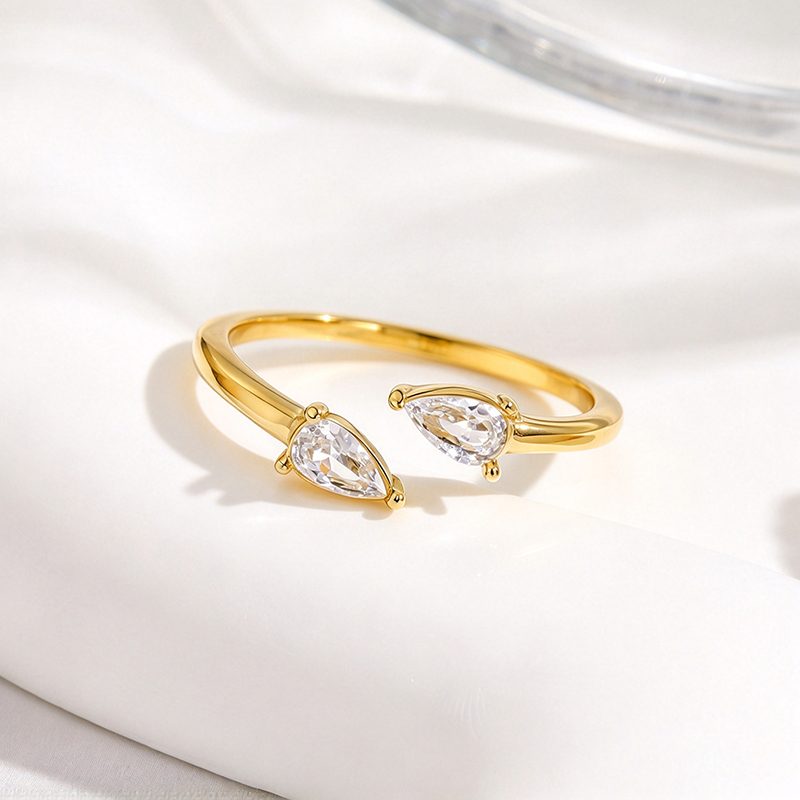 How to Stack Rings: A Practical Ring Stacking Guide
 Birthstones by Month: The Complete Guide